
What ADHD sleep actually looks like and why your partner isn’t the problem
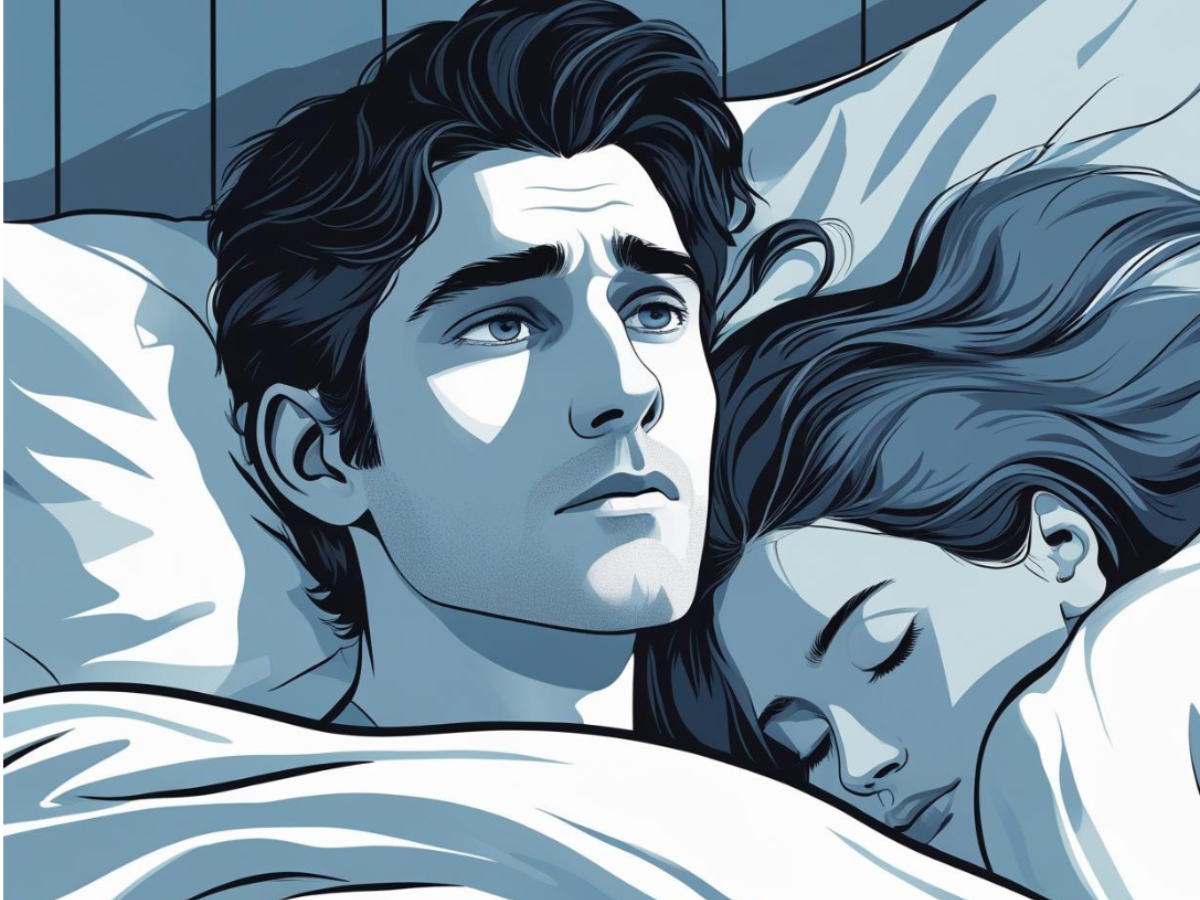
It’s 1 am and they’re still downstairs, or if they are in bed, you’re watching them turn over twice, sigh, and reach for their phone. They haven’t slept properly in days. You’re trying to be patient, trying not to say the thing, but you can’t help thinking that if they just went to bed earlier, maybe this wouldn’t keep happening.
Here’s what you’re missing about how their brain actually works.
Their brain doesn’t register bedtime the way yours does
ADHD brains don’t slow down when the lights go out or get drowsy on cue. The standard shutdown sequence just doesn’t run. It isn’t about poor habits, avoidance, or preferring chaos. It’s what happens when your circadian rhythm is delayed by 2-3 hours, your dopamine system is running on empty, and the internal signal that tells most people “sleep now” never quite arrives.
Their internal clock isn’t broken; it’s just set to a different time zone from yours.
The stimulant medication that helps them focus during the day can create a rebound effect in the evening, leaving them feeling wired exactly when they should be winding down. Asking someone with ADHD to go to bed early is like asking you to fall asleep in the middle of a work meeting. The setting might be correct, but their brain definitely isn’t.
If they’re not in bed, they’re probably trying not to wake you
Most ADHD adults aren’t avoiding you when they stay up late. They’re avoiding the conflict, guilt, or awkwardness of keeping you awake while they lie there thinking about council tax and the structure of the Roman Empire. They already know what this looks like to you; they understand how it affects your sleep and mood, and they’re aware that you’re carrying the emotional burden of worrying about their health and ability to function tomorrow.
This protective distancing gets misread as disconnection, but in fact, it’s the opposite. Your partner’s trying to manage their sleep problems without making them your issues too.
If they’re scrolling, it’s a strategy, not laziness
By evening, executive function is depleted, and the part of the ADHD brain that usually manages racing thoughts and sensory overwhelm has basically clocked off for the day. Stillness amplifies mental noise, making passive input a way to take the edge off enough to fall asleep eventually. That’s why the same person who can’t sleep in complete silence will drift off halfway through a documentary they’ve seen six times.
It doesn’t mean they’re not tired. It means their brain needs something predictable to override the internal chaos. What looks like stimulation to you is actually their attempt at creating a buffer between consciousness and sleep.
If they snap at bedtime, the system is crashing
ADHD adults spend their entire day regulating themselves, and by night, the fuel tank is empty. Impulse control drops, emotional reactivity spikes, and the part of the brain that normally smooths over social interactions is completely offline. Those bedtime arguments usually aren’t really about bedtime at all. They’re about being dysregulated and having run out of coping tools.
When this happens, don’t try to fix the situation or reframe their feelings. Just stop talking and go to sleep. Seriously.
If they don’t talk about their sleep problems, it’s not because they’re fine
Chances are, they’ve already tried magnesium, melatonin, sleep stories, avoiding screens, and every piece of sleep hygiene advice on the internet. They’ve succeeded for a night or two, failed spectacularly, and watched their progress collapse. Repeating this cycle for months or years becomes genuinely exhausting, and at some point, most people stop wanting to discuss it.
They’re not looking for sympathy or suggestions. They’re just trying to manage the problem without turning it into a relationship issue as well.
What to stop doing immediately
Stop asking why they’re awake. Stop suggesting they go to bed earlier. Stop offering new tricks, routines, or solutions you’ve read about online. Stop treating separate beds like relationship failure, and definitely stop starting meaningful conversations once the lights are out.
Every single one of these well-meaning approaches will make the situation worse, not better.
What to start noticing instead
They might be staying downstairs so you don’t hear them pacing around the bedroom. They might be playing the same boring playlist every night because it’s the only thing that works. They might be overheating but not registering it, or they might have kicked off the covers but not noticed they’re now freezing. They might be setting up elaborate reset routines you never see, or they might be lying completely still with their eyes open, just trying to wait it out.
None of this is a choice. It’s just how they’re getting through the night.
What actually helps
Keep the bedroom cool and dim the lights throughout the house earlier in the evening. If you’re still awake when they’re struggling to sleep, the most helpful thing you can do is say nothing at all.
Let them use whatever strategies they’ve figured out, even if they seem strange or inconsistent. The most effective approaches for ADHD sleep aren’t about traditional sleep hygiene anyway. They’re about working with delayed circadian rhythms, managing hyperarousal, and creating flexible systems that can survive executive function crashes.
When ADHD sleep improves, the timing gap between you starts to narrow. Tools like the Dimmer Switch Method™ help manage hyperarousal, allowing them to wind down earlier – potentially shifting from 3 am to midnight or even earlier. When working from home gives you both more flexibility, the gap narrows further as you can both stay up a bit later without compromising sleep quality.
Better sleep also means better emotional regulation overall. Fewer rejection sensitivity episodes triggered by minor disappointments, more executive function available for relationship maintenance, and less irritability from chronic exhaustion. When they’re sleeping better, they’re not just less tired – they’re more emotionally available, less reactive, and better able to communicate about timing without spiralling into catastrophic thinking.
What you can actively do to help
Understanding is the foundation, but you’re not completely powerless in this situation.
Help them handle the morning routines they’ll struggle with after particularly bad nights. Avoid scheduling essential conversations for the evening when they’re most likely to be dysregulated. Create buffer time around bedtime where there are no decisions to be made, no planning required, and no problems to solve. If they have strategies that work, even if they seem weird or inconsistent, protect the conditions that make those strategies possible.
The hardest part is accepting that your help might look like strategic non-intervention. Sometimes the most supportive thing you can do is step back and let your partner manage their brain the way they need to, without trying to optimise or improve their approach.
This isn’t about you doing less for the relationship; it’s about doing something completely different.
Remember that progress looks like fewer 3 am self-loathing spirals, not perfect 10 pm bedtimes.
Why does ADHD sleep wreck your sex life? (And how to get it back without the 11 pm guilt)
The intimacy problem nobody talks about
ADHD sleep issues don’t just disrupt bedtime routines. They disrupt physical connection in ways that most couples struggle to understand or discuss.
When one person’s energy peaks at 11 pm just as the other person is shutting down for the night, intimacy gets squeezed out by biology, not choice. This situation creates a cascade of relationship problems that go far beyond feeling tired.
Here’s what’s actually happening behind the scenes:
Their peak energy and interest hit exactly when you’re winding down for the night. Your natural timing as a couple stops aligning the way it used to. Rejection sensitivity makes them avoid initiating when the timing feels wrong, but when you begin and they’re not ready, their brain interprets this as “I’m disappointing them again.” They start withdrawing to avoid triggering more rejection sensitivity episodes.
Meanwhile, you’ve already had your shower and completed your evening routine, and now you need to be up for work at 7 am. Being approached for intimacy at 2 am means disrupted sleep cycles affecting tomorrow’s performance and needing another shower when you’ve already sorted out your hygiene for the night.
Eventually, you start feeling like their sleep problems matter more to them than you do.
This situation isn’t about reduced desire or attraction. It’s about mismatched timing colliding head-on with rejection sensitivity.
The guilt cycle makes everything worse. Your partner feels terrible about disappointing you, you feel bad about feeling disappointed, and their ADHD brain catastrophises your disappointment as proof they’re a failing partner. Eventually, both of you just stop talking about it.
What actually works:
Plan for afternoon connections when both of your brains are still online and functioning. Consider morning intimacy if they’re managing to get to sleep by 2 am. Most importantly, separate the timing issues from questions of desire or attraction. The problem isn’t that anyone wants connection less – the problem is that executive function crashes make evening timing nearly impossible.
Have conversations about this when you’re both calm and regulated, definitely not when one of you is frustrated at 11 pm and the other person’s brain has already switched off for social interaction.
The spark isn’t gone. It’s just operating on a completely different schedule than it used to.
This isn’t going away
This isn’t a phase they’ll grow out of, a preference they can change, or a personality flaw they need to fix. It’s a neurological mismatch between how their system winds down and how yours does.
You don’t need to solve their sleep problems; you just need to stop accidentally making them worse.
If you’ve managed that, you’ve already helped more than most people in your situation.
When understanding isn’t enough
If your partner is struggling with ADHD sleep and standard advice keeps failing them, the problem isn’t that they’re not trying hard enough. The problem is that most sleep advice is designed for neurotypical brains.
The ADHD Sleep Reset Kit is explicitly built for when ‘just turn off your brain’ isn’t an option. It includes the Dimmer Switch Method™ for managing hyperarousal, strategies for working with delayed circadian rhythms, and flexible approaches that keep working even when routines collapse completely.
For partners: This isn’t about fixing your ADHD partner or turning them into a neurotypical sleeper. It’s about giving them resources that actually match how their brains work. When they sleep better, timing gaps narrow, emotional reactivity decreases, and relationship stress reduces for both of you. Better sleep means fewer rejection sensitivity episodes, improved emotional regulation, and more energy available for connection.
For ADHDers: You already know your brain better than any generic sleep advice ever could. These tools work with your neurology, not against it.
Also available: Sleep Apnoea Survival Kit for ADHDers who suspect breathing issues are making their sleep problems even more complicated.
***NEW – Take our free 3-minute quiz to discover your specific sleep disruption pattern – whether it’s circadian drift, rumination loop, task paralysis, sensory dysregulation, or hyperarousal. Receive strategies that work with your pattern and discover what doesn’t.
For ADHDers. By ADHDers.
Backed by science, supported by lived experience, powered by hyperfocus.
© Copyright 2025. All rights reserved.
Join the ADHD Sleep Facebook group
